


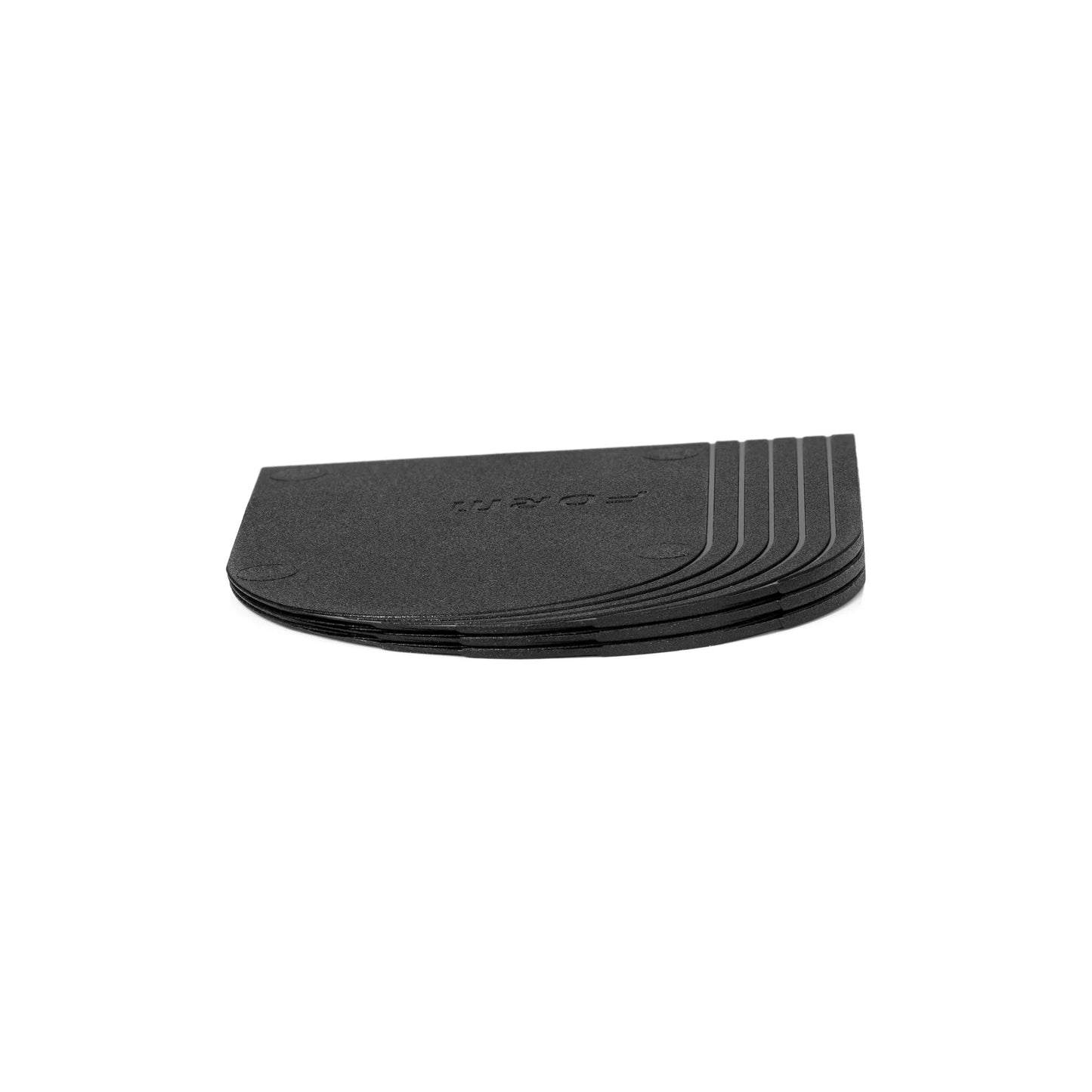
FORM In-Shoe Heel Wedges – Precise Rearfoot Stabilization and Correction
FORM In-Shoe Heel Wedges are a specialized biomechanical tool designed to directly correct the rearfoot (varus or valgus) within the cycling shoe. Unlike cleat wedges, which tilt the entire shoe, heel wedges isolate correction to the rearfoot, allowing for precise pronation correction and improved knee alignment without affecting forefoot alignment.
Product Philosophy: A stable heel is the foundation of bike control. By supporting the foot's downward slope, FORM wedges increase stability, improve pedal feel, and reduce unwanted heel movement within the shoe, directly translating into greater comfort and pedaling efficiency.
TECHNICAL SPECIFICATIONS
| Tilt angle | 1 degree (can be layered for a larger angle) |
| Design | Trimmable – universal size, can be cut to fit any shoe |
| Installation | Internal (placed under the original shoe insole) |
BIOMECHANICAL ADVANTAGES
| Function | Impact on biomechanics |
|---|---|
| Hindfoot correction 1° | Heel support to align the foot axis and reduce pronation. |
| Can be used as a Heel Lift | The use of two wedges in opposite directions creates a heel cup. |
| Anti-slip texture | Secure fit under the insert without the risk of shifting while driving. |
Tech Tip: Remove the insole from your shoe and place the wedge directly underneath it, in the heel area. The wider side of the wedge should be on the side that needs lifting (usually the inside for supination correction).
ABOUT THE FORM BIKEFITTING BRAND
FORM Bikefitting is a British brand based in Sheffield that has revolutionized the market for accessories designed to optimize cycling position. Founded by experienced bike fitting specialists, the company focuses on creating innovative, durable, and precise biomechanical solutions that solve real-world problems for cyclists. FORM products are designed and tested in the UK, becoming the standard equipment in professional fitting studios worldwide.
TESTED BY BIKE LAB
At Bike Lab, we consider FORM heel wedges one of the most underrated yet crucial tools in the "Science of Speed." Where standard stabilization methods fail, isolated rearfoot correction allows for a neutral foot position without interfering with the forefoot. The high-density polymer guarantees consistent biomechanical parameters for many seasons, making them an indispensable component for cyclists seeking marginal gains in movement efficiency.